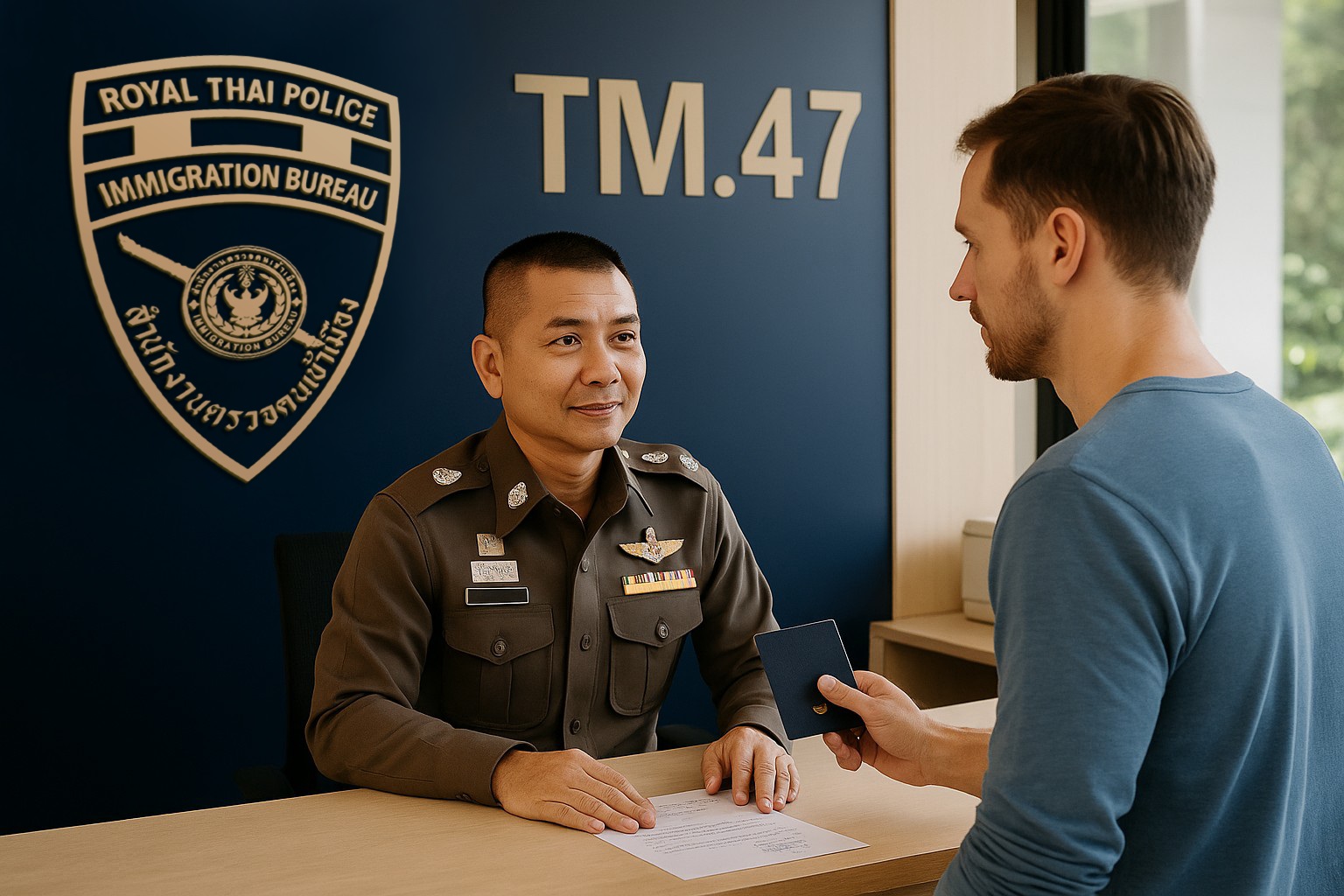
If you’re a foreigner staying in Thailand for more than 90 consecutive days, you are required by Thai Immigration law to report your current address every 90 days — a process known as the 90 Day Report or TM.47 notification.
This is not a visa extension, but simply an obligation to update your address with immigration — whether you rent or own property in Thailand.
Foreigners staying in Thailand on long-stay visas:
Excludes those on short-term tourist visas. Even if you’re living in a Bangkok condo you bought or are renting long-term, you still need to report.
You have 3 options:
Use the official Thai Immigration website.
Must be done between 15 and 7 days before the due date.
You'll need:
Passport copy, TM.6 card (departure card), Copy of latest visa stamp
Many expats in Bangkok file at Chaeng Wattana Immigration.
Bring required documents and TM.47 form.
Less common, riskier due to delays or lost mail.
Failing to submit your 90-day report can result in a 2,000 THB fine if you’re caught by immigration. In cases where you’re stopped and arrested during a random check, the penalties may be even higher. Beyond fines, missing your report can negatively impact your future in Thailand—particularly if you’re applying for visa renewals or looking to buy or sell property. A non-compliant visa record may raise red flags during legal or financial due diligence, potentially delaying or complicating transactions.
If you’re planning to invest or stay long-term in Bangkok, understanding the 90-day report is essential. Many foreigners mistakenly assume that buying a condo in Bangkok exempts them from immigration reporting — but that’s only true if you obtain Permanent Residency in Thailand. With PR status, you no longer need to file TM.47 reports every 90 days.
However, most investors or long-term residents stay under Thai Elite Visas, Retirement Visas, or even Investor Visas — and all of these still require 90-day reporting. Even if you own property or are leasing a condo for over 12 months, you must still update immigration on your current address every 90 days.
Failing to comply can result in fines or issues when renewing your visa or completing future property transactions. So whether you’re buying to stay or renting long-term, make sure the 90-day report is part of your immigration routine.
While owning property in Thailand doesn’t exempt you from the 90-day reporting requirement, it can offer several long-term advantages for expats and investors. Having a property in your name can strengthen your eligibility for visa extensions, showing immigration authorities that you have genuine ties to Thailand. It can also support your application for specific Investor Visas or the Long-Term Resident (LTR) Visa, both of which are designed to attract foreign investors and retirees.
Additionally, property ownership can make it easier to apply for a Pink ID card or even permanent residency in the future. These documents can simplify everyday life in Thailand — from opening bank accounts to buying vehicles and staying long-term without frequent immigration visits.
Yes — even if you obtain a Pink ID card (Thai Identification for foreigners with a residence in Thailand), you are still required to submit the 90-day report unless you have Permanent Residency (PR) status. The Pink ID card helps with everyday life in Thailand, such as dealing with banks, government offices, and healthcare services, but it doesn’t replace the legal obligation for foreigners on a visa to report their address to immigration every 90 days. Only those with PR status are fully exempt from TM.47 reporting.
To stay compliant and stress-free in Thailand, it’s important to set regular reminders on your phone or calendar every 90 days to ensure you don’t miss your report deadline. Opting for digital filing can help reduce unnecessary trips to the immigration office. If you’re planning to buy property for long-term residence, it’s wise to consult with a specialist who understands both the property and visa requirements in Thailand. Finally, consider exploring high-yield property investments in Bangkok, which can offer returns of up to 7% annually, helping you grow your wealth while enjoying your time in the city.
At RE Property Thailand, we:
It’s a requirement for foreigners staying in Thailand for over 90 consecutive days on a long-term visa. You must notify Immigration of your current address every 90 days, using form TM.47.
Yes. Property ownership doesn’t exempt you from this rule. Unless you have Permanent Residency (PR), you’re still required to submit the 90-day report.
You may face a fine of 2,000 THB. If caught during a police or immigration check, the fine can increase. Missing reports may also impact future visa renewals or property-related applications.
Yes. These visa types still require 90-day address reporting unless you hold Permanent Residency.
Yes. Even if you’re renting a condo long-term (12 months or more), you must complete the report every 90 days if you reside in Thailand continuously.
Absolutely. While ownership doesn’t waive the 90-day report, it may strengthen your visa extension case and help qualify for programs like the Long-Term Resident (LTR) or Investor Visa.
If you have a Pink ID card but do not hold Thai Permanent Residency, the 90-day report may still apply based on your visa type. It’s best to confirm with immigration for your specific case.
You can file in person, via a representative, online (if eligible), or by mail. Many long-term expats also use legal or relocation services to streamline this process.
Investing in Bangkok real estate can offer high yields (up to 7% annually) and serve as a stepping stone for longer stays, family visas, or applying for permanent residency over time.
Stay informed with the latest expert insights on Bangkok’s thriving real estate market, investment opportunities, and property trends.
To register your property information, please fill out the form below